The POS System Built for Pizza
Pizza breaks generic POS software. Between half-and-half pricing, delivery reconciliation, phone-order volume, and razor-thin food costs, a pizzeria needs a system built for how it actually operates. These guides cover exactly that.
Which processor for pizza?
Getting the best payment-processing setup for a high-volume shop.
Payments →Delivery leaking money?
Reconciling third-party delivery so those orders don't cost you.
Delivery recon →What's my real food cost?
Calculating and controlling cost per pizza, slice, and topping.
Food cost →Labor eating margins?
Scheduling and labor tactics that protect your bottom line.
Labor cost →Start with the best pizza POS guide or the food-cost calculator.
Why pizza needs its own operating library
A pizza shop is usually balancing dine-in, counter pickup, phone orders, online orders, driver dispatch, slice service, coupons, third-party tablets, and a make line that depends on timing. The POS has to preserve topping logic, route tickets correctly, and show whether dough, cheese, labor, delivery fees, and refunds are eroding margin.
PizzeriaPOS should therefore answer shop-owner questions rather than publish generic technology summaries. A useful page should help the reader build a modifier matrix, compare delivery channels, audit a game-night rush, train new counter staff, reconcile marketplace deposits, or decide whether a pizza-specific POS is worth the switch from a general system.
Order accuracyHalf-and-half, toppings by side, specialty pizzas, timed pickup, and delivery changes need proof in the demo.
Margin controlFood-cost, labor, discounts, refunds, and delivery commissions should be visible without spreadsheet cleanup.
Peak serviceFriday dinner, school events, sports nights, and catering orders should be planned with capacity-aware workflows.
Minimum evidence before changing systems
Before a pizzeria replaces its POS, the owner should keep proof from the current system and the proposed system side by side. Useful evidence includes a week of order-channel mix, the current delivery-fee and tip reconciliation process, the real modifier tree, the top coupons, refund reasons, driver settlement notes, closeout reports, and a list of staff workarounds.
The new system should be tested against that evidence. If the demo cannot price the shop's actual half-and-half pizzas, route a late online order, report delivery leakage, protect cash drawer rules, or explain data export after cancellation, the owner has not finished due diligence. These are the checks this site should keep making visible.
New in 2026 · Voice AI
AI voice for the pizzeria phone that never stops ringing
A busy pizzeria can lose real orders when the phone rings through dinner service. An AI voice assistant answers every call, takes the full order including half-and-half and modifiers, quotes an accurate ready time, and sends it to the make line, no staff pulled off the counter.
See how KwickPhone's voice AI works → What Is Pizzeria Online Ordering? The Complete Setup Guide for 2026Pizzeria online ordering is a digital system that takes customer orders through your own website or app straight into yo
 What Is Pizzeria Employee Scheduling? Tips and Best Practices for 2026Pizzeria employee scheduling guide for sales forecasts, station coverage, labor budgets, availability, call-outs, and ru
 What Is Pizza Phone Order Efficiency? Tips to Speed Up Every CallPizza phone order efficiency measures how fast and accurately your staff handles phone orders. Learn 14 proven strategie
 What Is a Pizza Modifier Matrix? Toppings, Halves, and Pricing LogicA pizza modifier matrix is the rules table that prices every topping against size, placement, and intensity. Here is how
 What Is the Best POS System for Pizzerias in 2026?The best POS system for pizzerias handles half-and-half toppings, delivery zones, and online orders natively. We break d
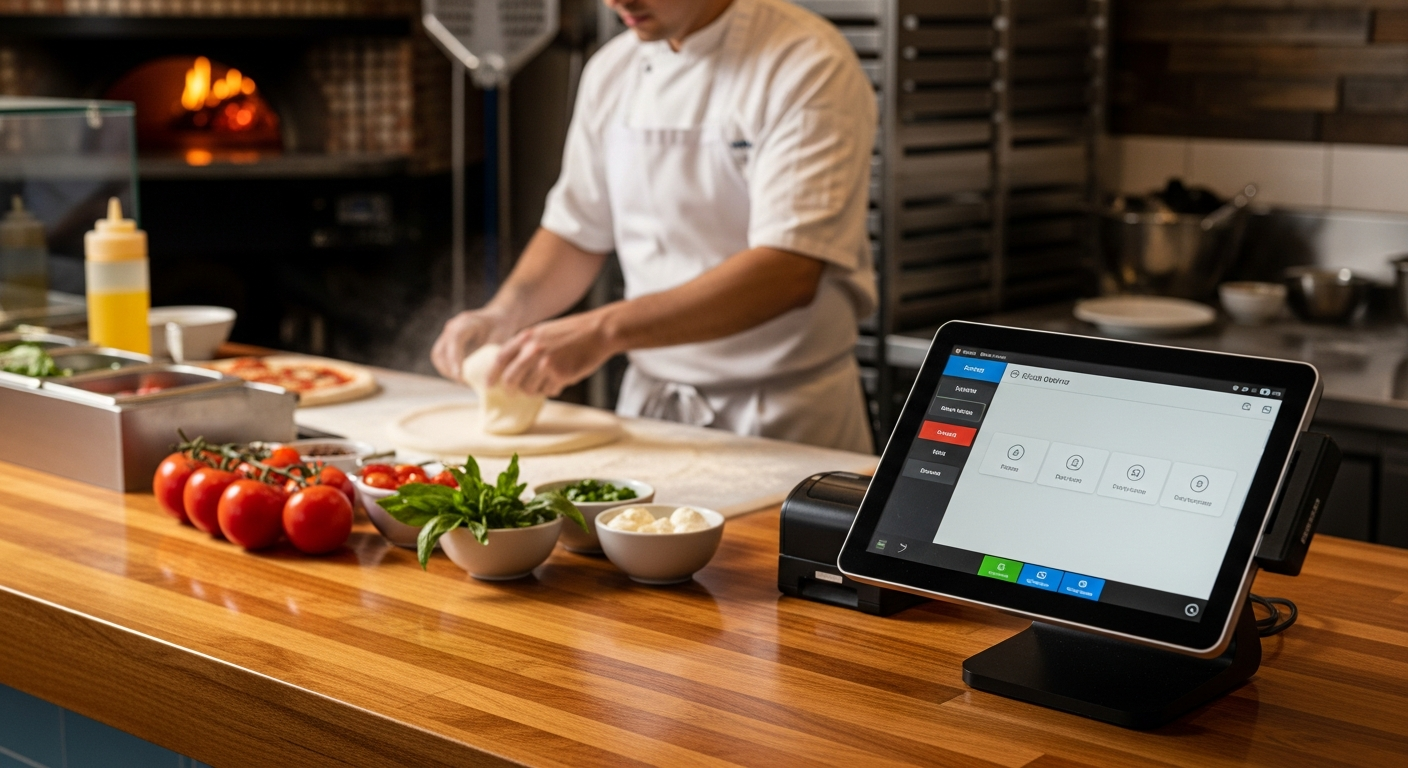 Slice Shop POS: What Counter-Service Pizzerias Actually NeedFast checkout, grab-and-go, and minimal modifiers — POS for high-volume slice shops.